The Islamic Heritage of China: Exploring Centuries of Influence and Tradition

Islam’s presence in China dates back to the 7th century during the Tang Dynasty, when Muslim merchants and envoys traveled to China along trade routes like the Silk Road, bringing the message of Islam with them. These Muslim foreigners were known as the “Huihui,” and they played a significant role in the cultural and economic exchanges between China and the Islamic world.
One of the key figures in this early spread of Islam in China was Sa’d ibn Abi Waqqas, a close companion of the Prophet Muhammad (PBUH) and one of the Ten Promised Paradise. Sa’d played a vital role in establishing the first Muslim community in China and spreading the teachings of Islam among the Chinese people.
During the Yuan Dynasty from 1271-1368, the Mongol rulers of China & Muslim Traders, who introduced Peking Duck, popular dish in Beijing, then known as Peking, and later became a favorite at the imperial court. The Mongol rulers of China had close ties with the Muslim world, particularly with the Ilkhanate in Persia. Many Muslims from Central Asia and Persia migrated to China during this time and settled in cities like Beijing and Xi’an. Also, the famous Chinese Muslim explorer Zheng He, who led seven voyages to the Indian Ocean and beyond during the Ming Dynasty in the 15th century, expanded Chinese influence but also helped to spread Islam to Southeast Asia and Africa.

The Hui ethnic group, who are predominantly Muslim, have been living in China for over a thousand years. They are descendants of Arab and Persian merchants who settled in China and intermarried with the local Han Chinese population. The Hui people are Chinese-speaking Muslims who are primarily found in Northwestern China. The Hui have their own distinct culture and language, but are culturally assimilated into mainstream Chinese society.
China is home to one of the largest populations of Muslims in the world, with estimates ranging in excess of 50 million individuals. Over the centuries, Islam has spread across the country, with vibrant Muslim communities found in cities like Beijing, Xi’an, and Guangzhou. Chinese Muslims have made significant contributions to the culture and society of China, blending their religious beliefs with traditional Chinese practices. Today, Muslims in China continue to enrich the country’s diverse cultural landscape, maintaining their faith while also embracing modernity and progress.
The Muslim population in China is a dynamic and diverse community, representing a wide range of ethnicities, languages, and traditions. From the unique culture and language of the Hui people* to the rich traditions of the Uighurs, Kazakhs, Kyrgyz, Tajiks, and Uzbeks in Xinjiang, you will be immersed in a world of diversity and richness. The Hui people are an ethnic Muslim minority group in China, with a unique culture and language that sets them apart from the majority Han Chinese population. The Hui people have their own distinct language, known as Huihuiyu, which is a mixed language derived from Mandarin Chinese and Arabic. It is written in the Arabic script and incorporates Islamic terminology and influences. In terms of culture, the Hui people have a strong Islamic influence, with traditions and customs that reflect their Muslim identity. They observe Islamic holidays and religious practices, such as fasting during Ramadan and attending Friday prayers at the mosque.
Chinese Muslims have a rich heritage of arts, cuisine, and architecture that reflect their unique cultural identity. From the stunning mosques of Kashgar to the delicious flavors of Xinjiang cuisine, the influence of Islam is evident throughout China. As the country continues to grow and evolve, Chinese Muslims play an important role in shaping the future of China, bridging the gap between East and West and serving as a vibrant expression of the country’s multicultural society.
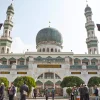
To experience the rich history of Islam in China, we embark on this journey by first visiting iconic sites like the Great Mosque of Xi’an. Next, we experience the unique blend of traditional Chinese architecture with Islamic influences, and immerse ourselves in the rich Islamic culture of the region, and indulge in delicious halal cuisine while exploring the bustling Muslim communities in cities like Beijing and Shanghai. We discover the intricate connections between Islam and Chinese society, and gain a deeper understanding of the country’s diverse cultural heritage through this enriching travel experience. Travelers on this unforgettable trip to China can immerse themselves in the vibrant Muslim community in China, learn about the contributions of early Muslim pioneers like Sa’d ibn Abi Waqqas, and witness the enduring legacy of Islam in Chinese history.