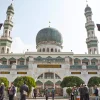
Travelled Bosnia As A Muslim Traveller. It Changed Something In Me

Seven days of Bosnia Muslim travel
I didn’t know what to expect when I boarded the flight to Sarajevo. Bosnia wasn’t the first destination that came to mind when I thought about Islamic travel. Morocco, yes. Jordan, absolutely. Turkey was always somewhere on the list. But Bosnia?
Someone told me it would feel different. That the Islam here had survived things most of us couldn’t imagine, and that you could feel it in the stone walls, the call to prayer, and the way people still greet you with salam on the street. I didn’t quite believe them.
By the end of seven days, I understood exactly what they meant.
This is a first-person account of Bosnia Muslim travel with Islamic Travel Australia, covering the mosques, the waterfalls, the cooking classes in village kitchens, and the moment at Blagaj Tekke where something in me went very quiet. If Bosnia has been sitting in the back of your mind, read this first.
Sarajevo hits different when you pray where Ottomans prayed
The first thing that got me was Bascharsija. Sarajevo’s Ottoman old town doesn’t feel like a tourist district pretending to be historical. It feels genuinely, stubbornly itself. Cobblestones worn smooth, copper craftsmen still at work, the smell of Bosnian coffee drifting through narrow lanes.
We arrived in the evening. Our guide walked us through the quarter as lanterns came on one by one, and the Maghrib adhan drifted across the rooftops from Gazi Husrev-beg Mosque. Built in the 1530s, it is one of the most significant Ottoman mosques in the Balkans. The prayer rugs inside are worn from centuries of use. You don’t feel like a tourist standing there. You feel like you belong.
Day two brought us deeper into Sarajevo’s layered story. The Latin Bridge, where history turned in 1914. The War Tunnel Museum, where Sarajevo’s survival during the 1990s siege becomes real in a way no documentary can replicate. One of the women in our group cried quietly as a guide explained how civilians passed through this cramped tunnel under sniper fire just to reach food and medicine. It was the kind of history that refuses to stay at a distance.
That evening, we joined a tekija dhikr session with local Bosnian Sufis. Sitting in a circle, breathing together in remembrance of Allah, strangers from Australia becoming something else entirely. I’m not sure what to call what happened there. But I’ve thought about it every day since.

The road to Travnik and Jajce
Bosnia’s green interior is genuinely startling. The drive toward Travnik wound through valleys and hills that made several people in the group go quiet just to look. This is a country where the landscape does something to your nervous system.
Travnik was Bosnia’s Ottoman capital for over a hundred years. The hilltop fortress looks out over the entire region, and the Sulejmanija Mosque below it carries a stillness that is hard to describe. Lunch was cevapi, Bosnia’s beloved grilled dish, eaten outside in the sun with people we had only just met but somehow already trusted.
In Jajce, the Pliva Waterfalls cascade 22 metres into a scene so striking it takes a second for your brain to register it as real. The turquoise Pliva Lakes with their old wooden watermills sit nearby in perfect quiet. We stood there for a long time, saying very little.
The day I didn’t expect: village life, burek, and breathing again
Day four was intentionally slower. After Sarajevo’s emotional intensity and the historical weight of Travnik and Jajce, our guides knew we needed something different.
We drove into Bosnia’s countryside, rolling green hills, clean air, the kind of silence you don’t find at home. A light walk through gentle valleys. Then lunch with a local family, homemade bread broken together at a table where language didn’t matter because hospitality transcends everything.
The afternoon was a traditional Bosnian cooking class. Burek, the flaky, meat-filled pastry that Bosnian grandmothers have been making for generations. We got flour on our hands and laughed a lot. The recipe came with stories of mothers and grandmothers passing it down. It’s the kind of experience that makes you realise how much of a culture lives in its food.
By dinner, our group had changed. The small awkwardnesses of travelling with strangers had dissolved. People were sharing real things. By the time we gathered for evening prayer, it felt less like a tour group and more like a group of people who had known each other for years.
Mostar’s Old Bridge and the spring that slows your heartbeat
The train journey from Sarajevo to Mostar is worth the trip alone. Bosnia unfolds outside the window in slow, winding turns, mountains, rivers, villages perched on hillsides. It felt like a meditation before we had even arrived.
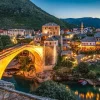
The Stari Most, Mostar’s famous Old Bridge, was built by the Ottomans in the 16th century. In the 1990s war, it was deliberately destroyed. In 2004, it was rebuilt stone by stone. Standing on it, looking down at the emerald Neretva River, you carry both of those facts at once. The bridge is not simply old. It has survived something. You can feel that in the stone.
Later we drove to Blagaj Tekke, a 16th-century Sufi monastery built directly into the cliffs above the Buna River spring. Turquoise water emerges from ancient rock with a force and clarity that seems almost impossible. Dervishes meditated here for 400 years. I sat at the edge of the water for a long time and let the sound of it work on me. My breath slowed. The noise in my head went quiet. I have been chasing that feeling ever since.
Kravica Waterfalls: when nature humbles you into gratitude
Nothing quite prepares you for Kravica. The 25-metre cascade doesn’t ease you in. It announces itself with roar and mist and the kind of force that makes you feel properly small.
We walked the trails around the waterfall in the morning and spent the afternoon however each of us chose. Some walked. Some sat with Bosnian coffee and said nothing. Some journalled. There was no agenda. The day existed purely to absorb what we had experienced.

That evening in Mostar, our group sat together for dinner and took turns sharing the moment that had stayed with them most. It went on for two hours. No one wanted it to end.
Halal-friendly travel in Bosnia: what Muslim travellers need to know
Bosnia is one of the easiest destinations for Muslim travellers in the world. Here is what to expect practically.
Halal food
Bosnia is a majority-Muslim country and halal food is the norm, not the exception. Restaurants throughout Sarajevo, Mostar, and tourist areas serve halal meat as standard. The local cuisine, cevapi, burek, pita dishes, lamb stews, is naturally halal and genuinely delicious. In smaller villages, host families prepare halal meals without a second thought. You won’t find yourself searching or compromising.
Prayer facilities
Mosques are found in every neighbourhood, particularly in Sarajevo and Mostar. Many restaurants and public spaces include prayer areas. On the Islamic Travel Australia tour, prayer times are built into the daily schedule, not worked around.
Muslim-friendly accommodation
Hotels in Sarajevo and Mostar are accustomed to Muslim guests. Qibla directions are often marked in rooms. You won’t need to pack a compass.
Cultural sensitivity
Bosnia is culturally relaxed and welcoming. Modest dress is respected but not enforced outside of mosques. Women wearing hijab are completely unremarkable across the country. You will feel welcomed exactly as you are, regardless of how you practise.
Language
Bosnian is the primary language. English is widely spoken in tourist areas and at all major sites. Your guide is with you throughout, so communication is never an issue.
Practical travel tips for Bosnia
Best time to visit: Late spring (May to June) and early autumn (September to October) offer mild weather and manageable crowds. Summers are warm and pleasant.
Getting there: Most travellers fly via a European hub, Vienna, Istanbul, or Frankfurt are common connections, into Sarajevo International Airport.
Currency: The Bosnian Convertible Mark (BAM) is the local currency. Euros are widely accepted in tourist areas and ATMs are readily available in cities.
Transport: Your Islamic Travel Australia tour includes private transport throughout, so there are no complex connections to navigate independently.
Visa: Australian citizens do not require a visa for Bosnia and Herzegovina for stays of up to 90 days.
Connectivity: SIM cards are inexpensive and available at the airport. Most hotels offer reliable wifi.
Bosnia stays with you
That is the thing nobody properly warns you about before you go.
The prayer at Gazi Husrev-beg Mosque. The silence at Blagaj. The moment at Kravica when the sound of the falls became all there was. The dinner table in Mostar where a group of strangers became something else entirely.
If Bosnia has been sitting quietly at the back of your mind, this is your nudge. It will ask things of you, your attention, your willingness to slow down, your openness to being moved. It will also give you things you weren’t expecting.
To find out more about travelling Bosnia with Islamic Travel Australia, get in touch with our team via the chat bot or our Enquiry form on our Bosnia tour page Bosnia Unlocked.
Frequently asked questions about Bosnia Muslim travel
Is Bosnia halal-friendly for Muslim travellers?
Yes, very much so. Bosnia is a majority-Muslim country where halal food is widely available, mosques are found in every city, and Muslim travellers feel completely at home.
What Islamic heritage sites are in Bosnia?
Bosnia holds some of Europe’s most significant Islamic heritage. Key sites include Gazi Husrev-beg Mosque in Sarajevo (built in the 1530s), the Blagaj Tekke Sufi monastery, the Sulejmanija Mosque in Travnik, and extensive Ottoman-era architecture throughout the country.
Is Bosnia safe for tourists?
Bosnia is safe for tourists. Sarajevo and Mostar are well-visited international destinations with good infrastructure. Standard travel precautions apply, as with any destination.
What is the best time to visit Bosnia?
Late spring and early autumn are ideal. May, June, September, and October offer comfortable temperatures, lower crowds, and beautiful scenery.
Can I find halal food easily in Bosnia?
Yes. Bosnia is a Muslim-majority country and halal food is the standard in most restaurants across the country, not a specialist option you need to seek out.